

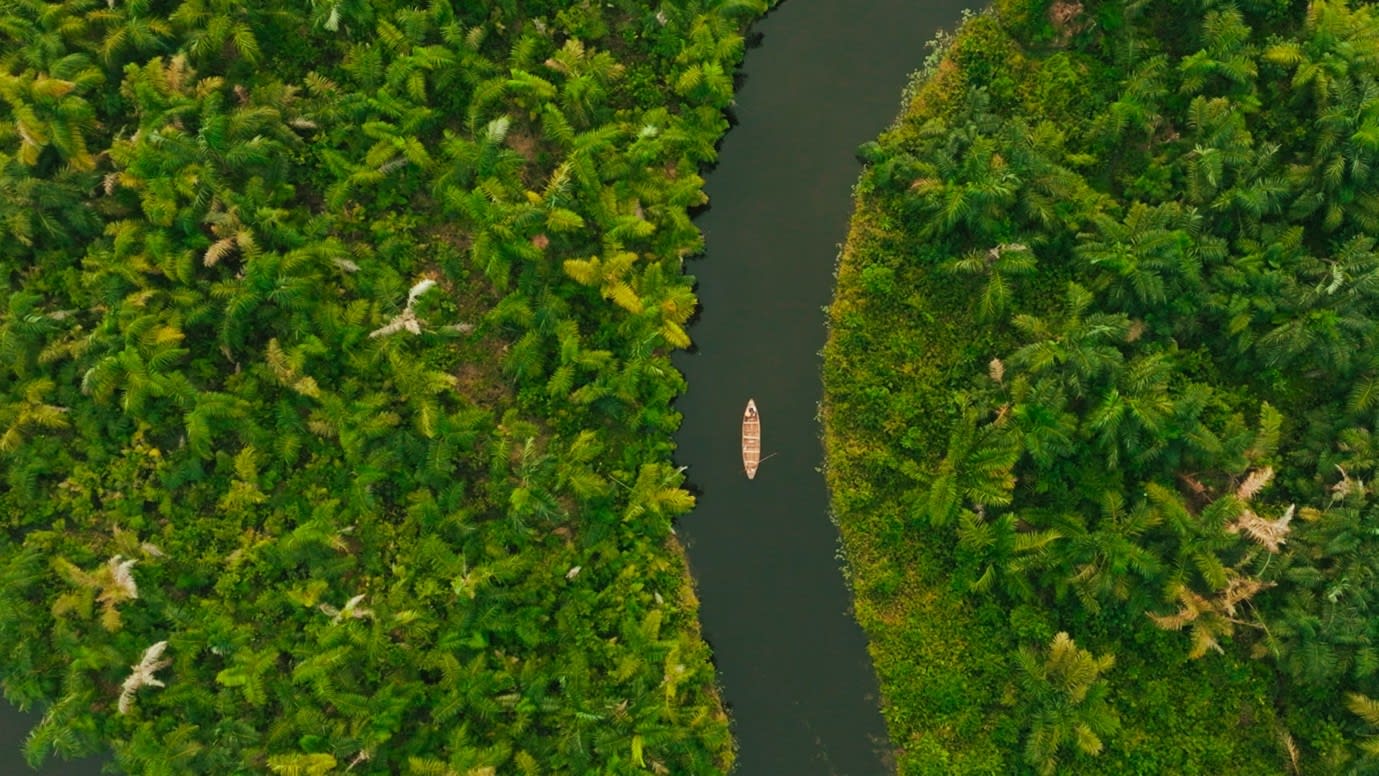


Rivière Noire, Benin: a canoe trip into the heart of Adjarra
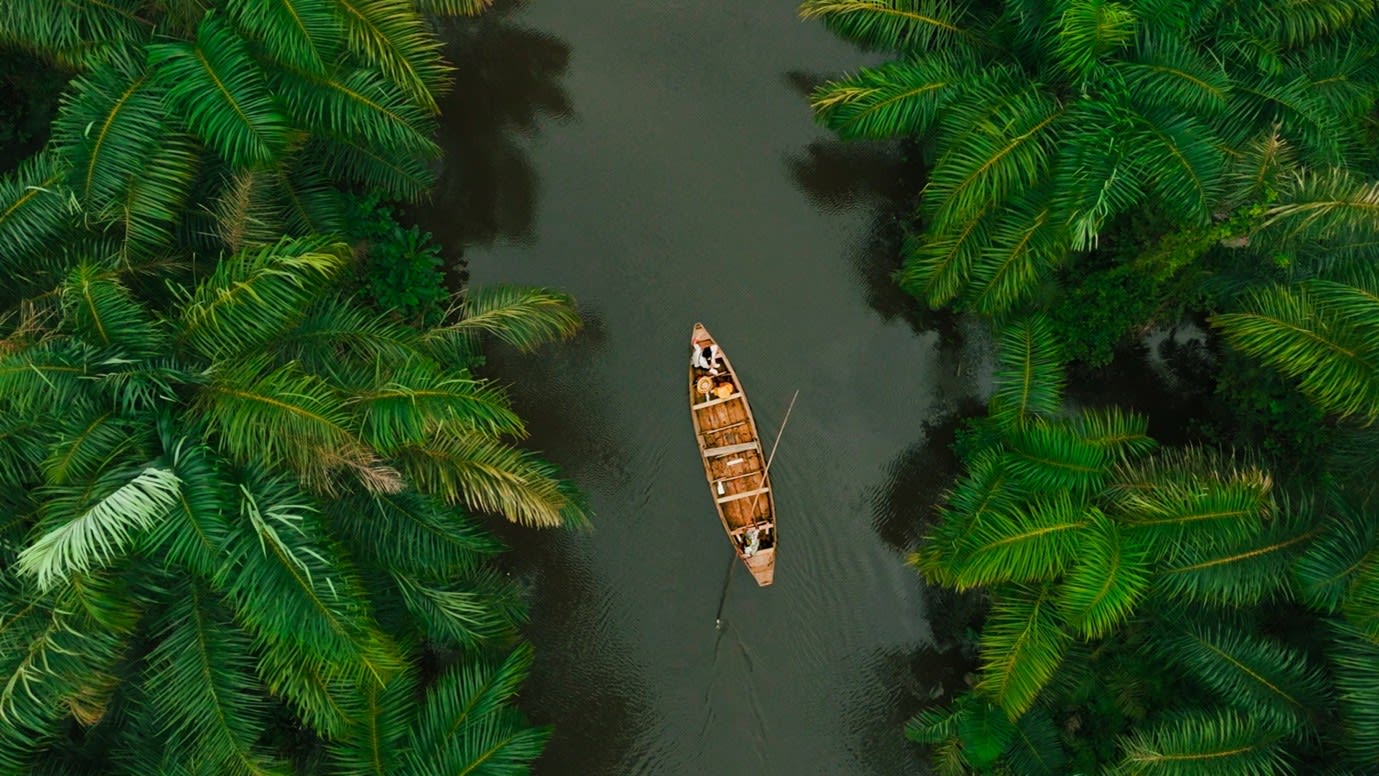
The canoeist pushes off with his pole, the riverbank recedes, and the town vanishes with three strokes of the paddle. Before you lies water so dark that it reflects the raffia palms like a black mirror; above, a cacophony of birds; all around, nothing but the rustling of the water plants. And yet we are only about twenty minutes from Porto-Novo, the capital of Benin, in the commune of Adjarra. This is where the Rivière Noire flows: one of those excursions that nobody talks about too loudly, but from which everyone returns thoroughly enchanted.
Half a day is enough. Yet it will take much longer to forget that silence.
Where is the Rivière Noire in Benin?
Head for the Ouémé department, in south-eastern Benin. The Rivière Noire winds its way through the commune of Adjarra, right next to Porto-Novo: the two are about ten kilometres apart, a 20- to 25-minute drive. From Cotonou, it’s about 45 kilometres and an hour’s journey – one of the few nature getaways you can decide to go on at the last minute.
And what about the name? It comes from the colour of its waters, which are ink-brown beneath the canopy of vegetation overhead. The locals have their explanations, the guides their legends; all are far better than any brochure, and they’re whispered as the paddle glides through the water.
Two hours by pirogue, and the world fades away
The Rivière Noire isn’t something you visit: it’s something you navigate. Here, there are no viewing points or marked trails – and that’s just as well. The scenery unfolds at water level, between the trunks of raffia palms and vegetation so dense that it eventually forms a canopy. As the canoe winds its way through the meanders, light filters through in flashes, the banks narrow, and you realise why visitors all speak of the same thing on their return: the tranquillity.
The birds lead the way. They are everywhere, and their chorus accompanies the canoe from one end of the route to the other; birdwatchers would do well to bring their binoculars. Beneath the hull, the fish have long sustained the traditional fishing trade of the riverside villages, whose inhabitants we pass as they go about their work, spear in hand.
The real luxury of this trip is its pace. The Adjarra canoeists know every branch of the river, every tree, and every story associated with them. Let them steer the canoe and take their time: that’s when the trip becomes a journey.
Adjarra, the City of Drums
The river brings silence; Adjarra brings sound. The nickname ‘City of Drums’ is by no means a marketing gimmick: for generations, the town has thrived on the craft of making percussion instruments, fashioned for Vodun ceremonies and the country’s major festivals, and sold far beyond Benin’s borders. Step inside a workshop – several welcome visitors, usually by appointment – and you’ll see a tree trunk being transformed into a drum, from hollowing out the wood to stretching the skin. Ask for a demonstration: they won’t turn you down.
You shouldn’t leave Adjarra without witnessing the creation of a raffia basket or a sculpture, two crafts that the town’s workshops have kept alive from generation to generation. Nor should you leave without following the journey of ‘sodabi’ at a producer’s premises: this spirit, made from palm wine or raffia wine, is still distilled using traditional methods, from harvest to still, and they’ll be happy to explain each stage to you.
Then there’s the food, which is by no means the least important attraction. Adjarra and, more broadly, the Ouémé region boast a genuine culture of pork, prepared in every possible way and served without fuss.
When to go and how to organise your trip
The dry season offers the most comfortable and sunlit conditions for sailing. As for the time of day, there’s no question about it: set off at the end of the day. As the sun sets, the dark water glows and the birds return to their roosts – the most spectacular moment of the trip, and the most photogenic.
There are two ways to go about it. Booking in advance with a guide or a local agency secures your slot and allows you to finalise the details of the trip, including its duration, stops in the villages and a visit to a workshop. Alternatively, turn up directly at the Adjarra jetty and discuss the details on the spot: this is more flexible, but also more unpredictable, especially during busy periods.
Allow two to three hours for a full trip, including a stop at a riverside village.
What to pack
We’re in a wetland area: mosquito repellent is the first thing to pop in your bag, even before your camera. Lightweight yet covering clothing – long sleeves, trousers or a long skirt – remains the best option in the Ouémé climate, complemented by a hat, sunglasses and sun cream: there’s plenty of shade under the raphia palms, but far less out on the river.
Pack comfortable, closed-toe shoes – you’ll need them for the pirogue, the soft riverbanks and the village alleyways – and a pair of binoculars if you’re interested in birds.
Extend your trip: Porto-Novo and southern Benin
The proximity of Porto-Novo is a real bonus. Benin’s capital is about twenty minutes from Adjarra.
On a longer stay, the Rivière Noire flows seamlessly into the must-see attractions of the south: Ganvié and its stilt houses, Ouidah and its history, and Abomey and its royal palaces.
FAQ: your questions about the Rivière Noire in Benin
Where exactly is the Rivière Noire?
In the Ouémé department, in south-eastern Benin, within the municipality of Adjarra, about ten kilometres from Porto-Novo (a 20- to 25-minute drive) and approximately 45 kilometres from Cotonou (one hour).
Why is it called the Rivière Noire?
Because of the dark, almost ink-like colour its waters take on beneath the canopy of the vegetation lining its banks.
How long does the pirogue trip last?
Two to three hours generally, usually including a stop at a riverside village and a visit to local craftspeople.
When is the best time to go?
The dry season, both for the boat trip and for the light. And, whatever the season, at the end of the day.
Do you need to book in advance?
It isn’t essential – you can arrange it directly at the Adjarra jetty – but booking through a guide or a local agency ensures you secure a slot.
Is it suitable for families?
Yes, the boat trip is peaceful and the pace is perfectly suited to children. Make sure you bring plenty of sun cream and mosquito repellent, and check with the operator that life jackets are available.