



Tourism in Cotonou: what to see and do in Benin’s economic capital
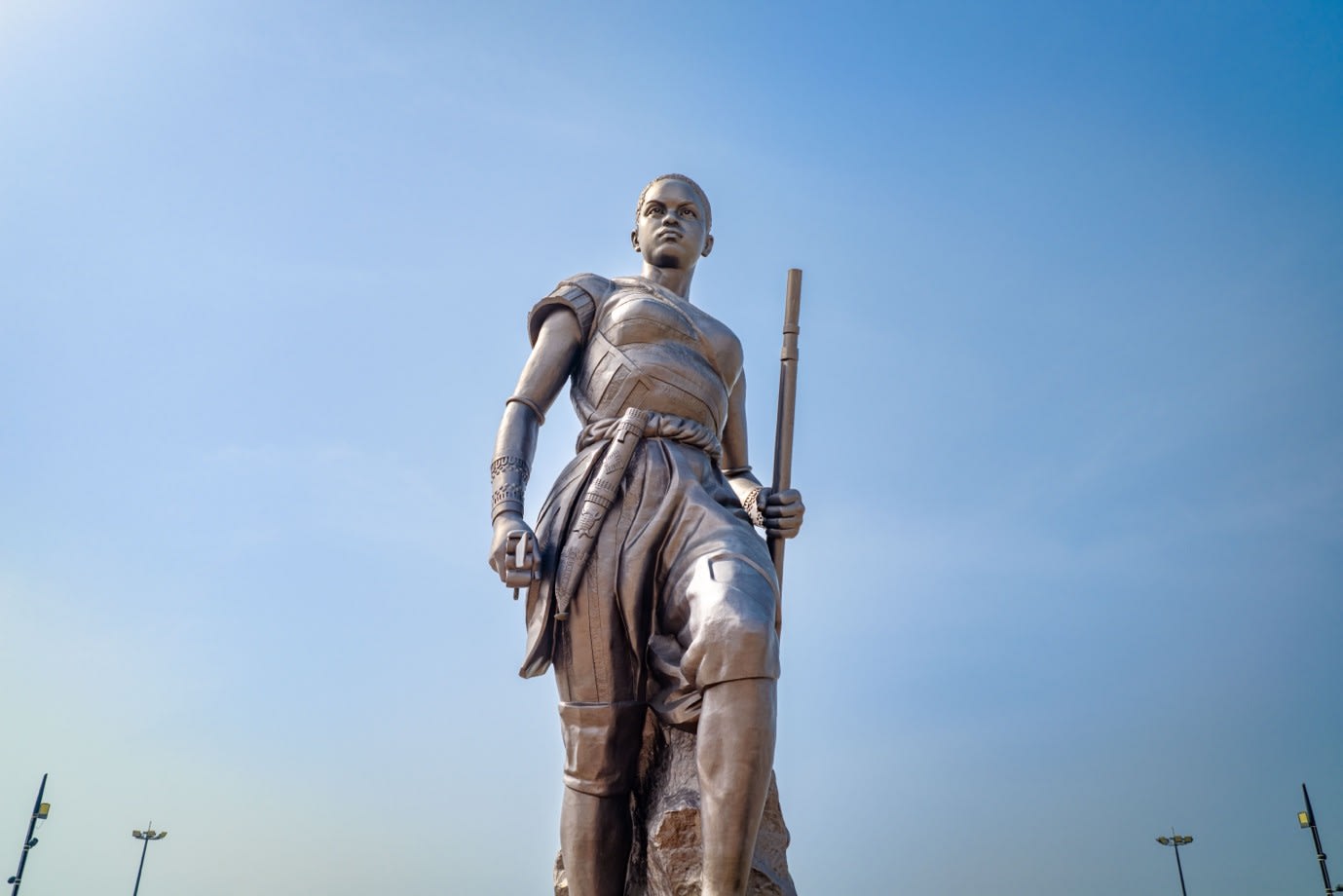
It is six o’clock in the evening on the Esplanade de l’Amazone. The bronze statue towers over the boulevard, immense, its arm outstretched, and the whole city seems to have gathered at its feet: families out for a stroll, joggers, doughnut sellers, teenagers taking photos of themselves in the orange glow of the Atlantic. Behind them, the sound of the Zémidjans rumbles like a tide. Welcome to Cotonou.
It is all too often described as merely a stopover, the gateway through which one enters Benin before heading off to Ganvié, Ouidah or Abomey. This is a mistake. As the economic capital, a city of art and murals, brand-new markets and beachside restaurants, Cotonou is a destination in its own right – a metropolis that is changing before our very eyes and which reveals its charm to those who take the time to stay. Here’s how to explore it.
Cotonou, the gateway to and beating heart of Benin
Everything comes here: international flights, cargo ships, ideas. The city stretches from west to east in a succession of neighbourhoods that are worlds apart from one another. In twenty minutes, you can go from the bustling shopping district in the centre to the beach huts along the coast, from a contemporary art gallery to a weavers’ workshop.
Places not to be missed
The Esplanade de l’Amazone, the place to be at dusk
It is Cotonou’s new landmark, and undoubtedly the finest urban achievement in contemporary Benin. L’Amazone, a monumental statue erected in honour of the female warriors of the Kingdom of Danxomè – the Agodjié – stands guard over a spacious esplanade facing the ocean. Come here at the end of the day: the light is low, a breeze picks up, and the stroll becomes one of those simple moments that stay with you for a long time. Not far away, the Place des Martyrs and the Bio Guerra Monument – named after the northern resistance fighter who stood up to colonial rule – extend this journey through Benin’s history.
The Port’s Graffiti Wall: the city in colour
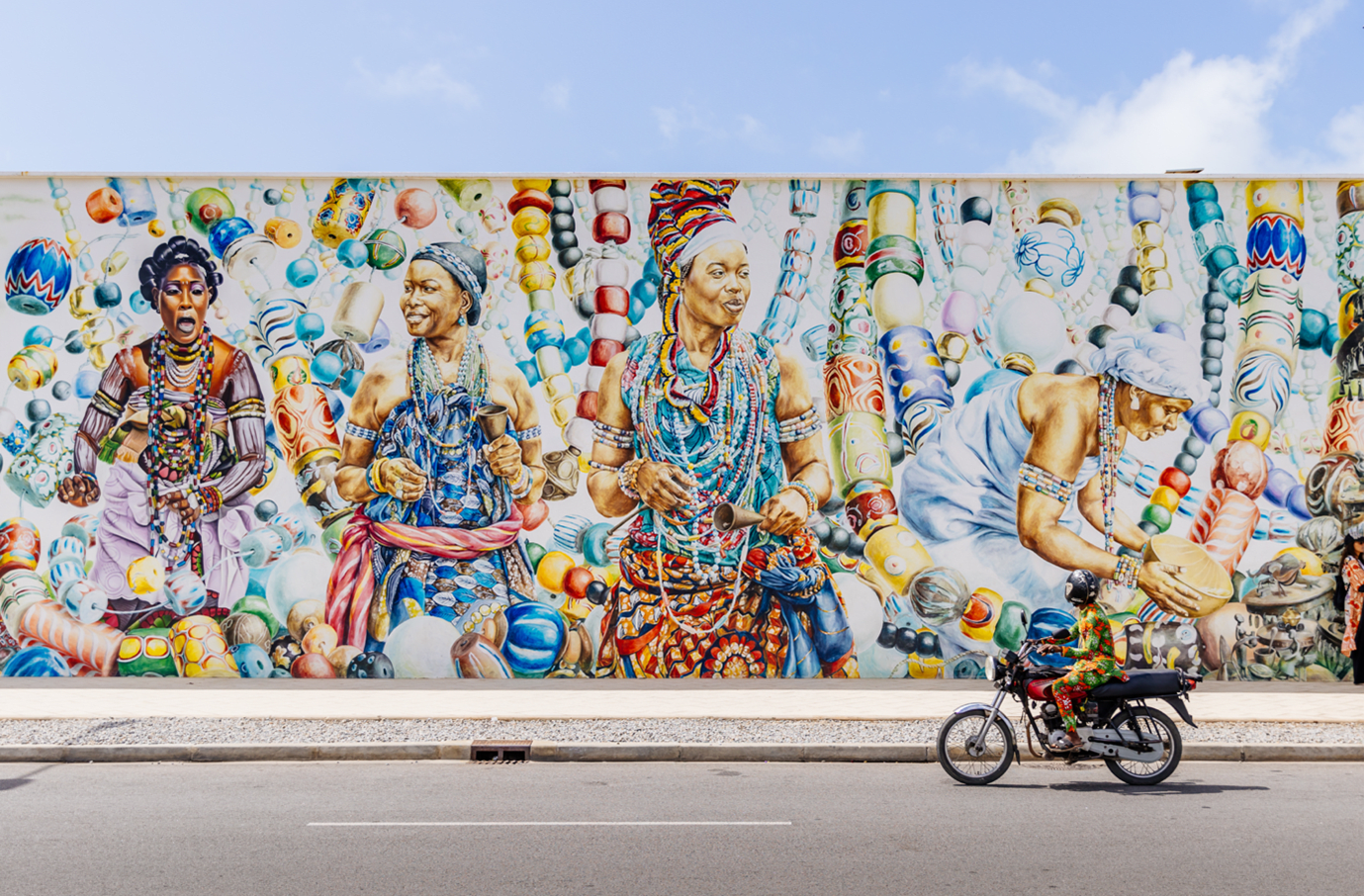
Stretching along the harbour wall is what is billed as Africa’s longest graffiti wall: hundreds of metres of murals by Beninese and international artists, best viewed on foot or at a leisurely pace from a motorbike. It’s free, it’s spectacular, and it says everything about the creative vitality of a city that has made contemporary art its hallmark, with galleries, foundations and artists’ studios springing up in its wake.
The modern Ganhi market: the new face of commerce in Cotonou
A stone’s throw from Notre-Dame Cathedral, right in the heart of the shopping district, the modern Ganhi Market was opened in December 2024. Its large metal framework, shaped like an umbrella, shelters a two-storey building that is well-ventilated and well-lit, organised into sections: foodstuffs, fruit and vegetables, fabrics, jewellery, cosmetics and leather goods, not to mention around ten shops and restaurants. Several hundred stalls have been set up there, the vast majority of which are run by women.
It is one of the showcases of Benin’s extensive programme of modern urban markets. And for the traveller, it offers the most delightful way to immerse oneself in the local culture: you can stroll about in the cool air, have a chat, sample some food, and leave with a piece of fabric or a bag of spices. Come along in the morning, when the fruit stalls are overflowing and the light streams through the roof trusses.
Fidjrossè and the coastline
To the west, the beach road is lined with beach huts, seaside hotels and restaurants with their feet in the sand. Fidjrossè is the heart of weekend life in Cotonou: people come here to stroll along the shore, enjoy a drink at sunset and eat grilled fish overlooking the Atlantic. A word of warning, however: the ocean here is stunning but treacherous, with a strong bar and powerful currents. Swimming is not recommended outside the areas monitored by certain establishments. The best way to enjoy the coastline is with your feet in the sand, not in the water.
Getting around: the Zémidjan school
A numbered yellow shirt, a helmet on his head, an encyclopaedic knowledge of every single junction: the Zémidjan is as much a Beninese institution as it is a means of transport. It is by far the quickest way to cross Cotonou during rush hour, and the most effective way to get a feel for the city. Tell the driver your destination, haggle over the fare before getting in – always with a smile; that’s the name of the game – and hold on tight. For journeys with luggage, opt for a taxi or a ride-hailing app.
Dining out: the restaurants of Fidjrossè
You won’t really understand Cotonou until you’ve spent an evening dining by the sea in Fidjrossè. Most of the establishments here are open-air, under thatched awnings, lit by fairy lights and playing Afrobeat: this is the city’s real social hub, and people dine late here. The absolute classic is braised fish – sea bream, sea bass or captain fish, depending on the catch of the day – served with ‘moyo’, that fresh sauce made from tomatoes, onions and chillies that always accompanies it, and sweet potato chips or fried plantains.
Next, broaden your horizons: amiwo, a maize paste cooked in a tomato sauce that gives it its red colour, usually served with chicken; atassi, the Beninese rice and beans dish; akassa, a ball of fermented maize paste wrapped in leaves, served with peanut, okra or vegetable sauces; and, from the north, wagasi, a Fulani cheese enjoyed grilled. There’s just one rule: always ask for the chilli on the side.
When to go and how to plan your trip
Good news: Cotonou is worth visiting all year round. The climate remains warm and the city never has a quiet season; you can visit in January just as easily as in July without it losing any of its vibrancy.
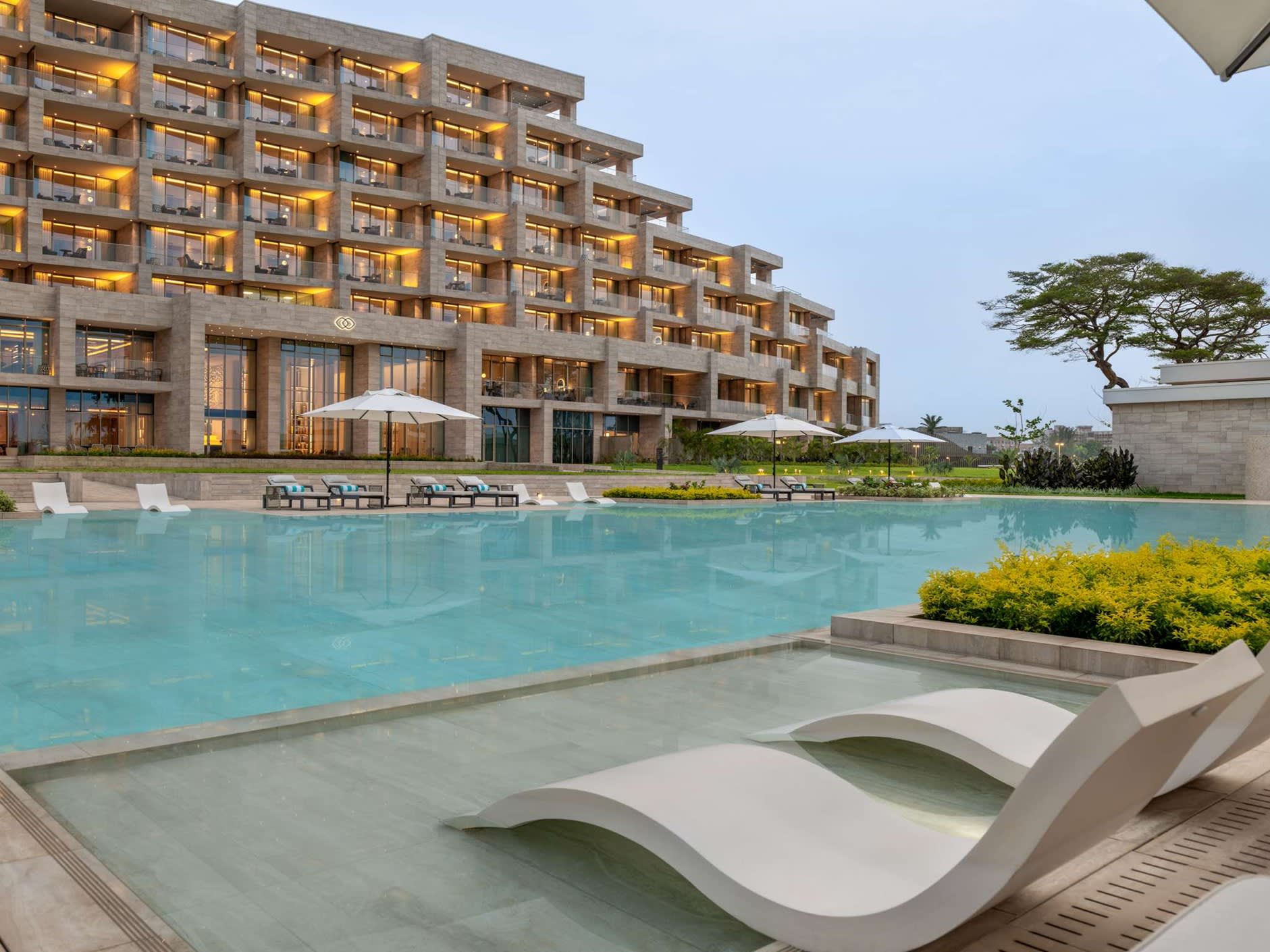
When it comes to accommodation, the city has something for everyone, from neighbourhood guesthouses to the Sofitel Cotonou Marina Hotel & Spa, whose façade on Boulevard de la Marina has become a landmark and which is the hub of most business and conference activity. Allow two to three days for Cotonou alone, or longer if you’re using it as a base: Ganvié, the lakeside town, is an hour away; Ouidah and its Gate of No Return are also an hour away; Porto-Novo is fifty minutes away.
FAQ: your questions about tourism in Cotonou
When is the best time to visit Cotonou?
All year round: the city is worth visiting at any time of year and has no off-season.
How long should you stay?
Two to three days for the city itself, or a week if you’re using it as a base to explore Ganvié, Ouidah, Porto-Novo and Abomey.
Is Cotonou a safe city for tourists?
Yes. Cotonou is a safe and welcoming city, both day and night, and Benin is renowned for the stability and hospitality that are its hallmarks. You simply need to use common sense, as you would in any major city.
Can you go swimming in Cotonou?
The ocean is powerful and the sandbar dangerous: swimming is not recommended outside the areas monitored by certain hotels. The beaches are still perfect for walks, watching the sunset and enjoying seaside restaurants.
Do you need a visa for Benin?
No visa is required for African nationals, who may enter Benin freely. Other travellers must obtain an e-Visa online before departure, via the official portal of the Republic of Benin.
Is the Zémidjan safe?
It is the most common form of transport in the city, used daily by the people of Cotonou. Negotiate the fare before getting in, and book a taxi or private hire vehicle for journeys with luggage.
Make Cotonou the highlight of your trip
There are a thousand ways to pass through Cotonou without really seeing it: rushing north from the airport, remembering nothing but the traffic jams and the heat. And then there’s the other journey – the one that begins when you sit under a thatched hut in Fidjrossè tucking into a grilled fish, when you leisurely ride a yellow motorbike along the harbour wall, or when you find yourself at the foot of the Amazon just as the sky turns orange.
Benin is full of treasures: the palaces of Abomey, the heritage of Ouidah, the stilt houses of Ganvié, the parks of the north. But it is here, in this bustling, creative and vibrantly alive metropolis, that the country best reveals what it is becoming. Don’t treat Cotonou as just a stopover. Make it your starting point.